

Buying a Catering Business, Not Just the Van: What Actually Transfers
Buying a catering business? The van and kit transfer. The hygiene rating, licences and bookings usually do not. A plain guide from CaterBids.uk.
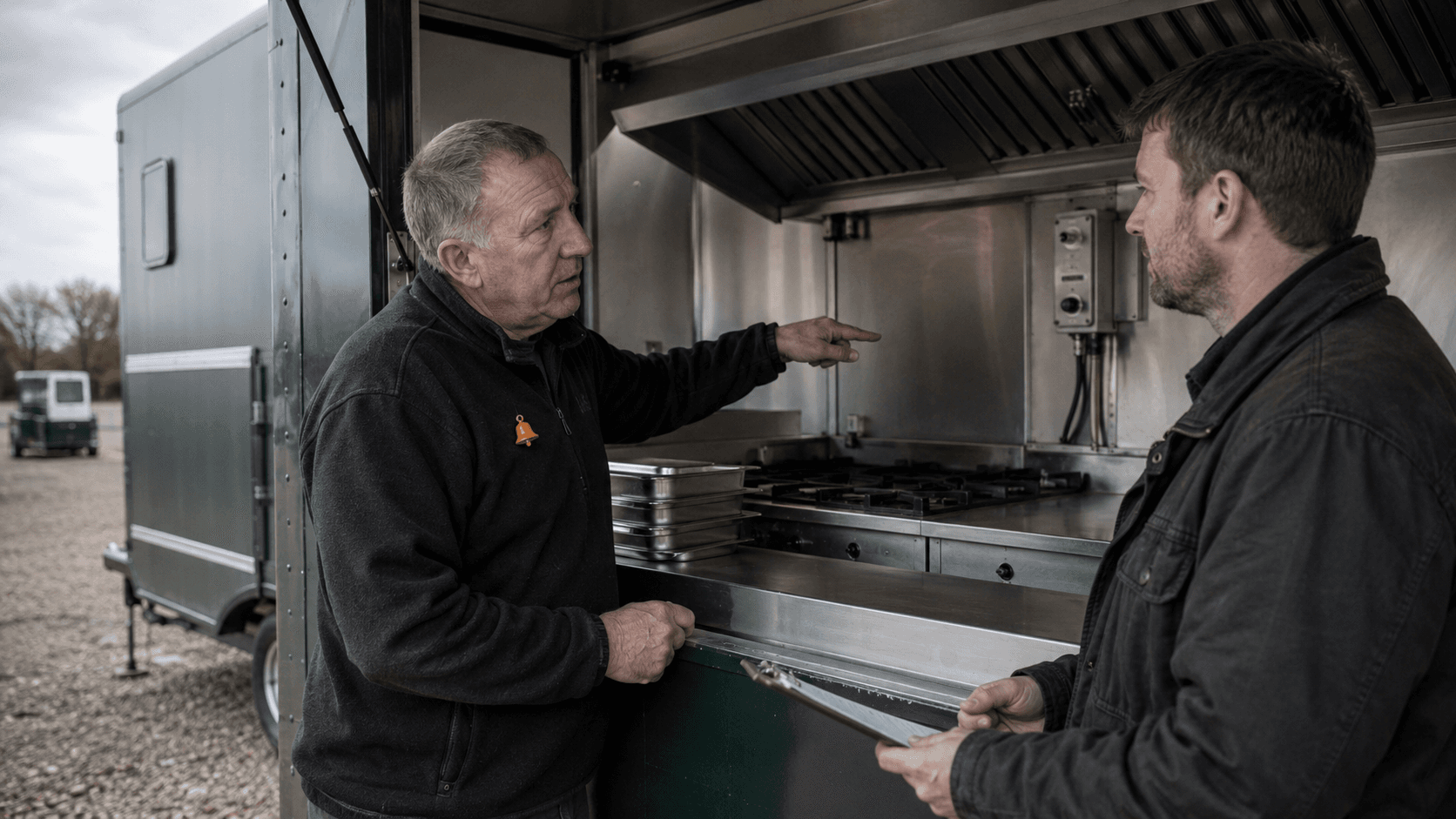
A trailer has no V5C, so ownership rests on the invoice. Get a bill of sale with the chassis number on it, or you have paid for something you cannot prove you own.
There is a moment that catches a lot of first time buyers out. The van is bought, the keys are handed over, the kit is checked, and then the council explains that the five star hygiene rating on the serving hatch belongs to the last owner and not to you.
It happens because a catering business looks like one object. A van, a trailer, a fit out, a customer base, a pitch, a rating. In law it is a pile of separate things, and each one transfers, or does not transfer, on its own terms.
If you are buying a catering business rather than a bare vehicle, the question worth asking before money moves is simple. What am I actually getting, and what am I being told I am getting.
What Usually Transfers
These are the parts that move with the sale, provided they are owned outright and written into the agreement.
- The vehicle or trailer: Ownership passes on the paperwork. A van needs the V5C signed over. A trailer used only in the UK has no V5C at all, because DVLA does not register domestic trailers, so ownership rests on the invoice and the receipt. That is why a proper bill of sale matters more on trailers than people expect.
- The equipment inside it: Fryers, griddles, counters, refrigeration, gas hoses, generators. All of it transfers if it is owned. Check for outstanding finance on the vehicle before you pay, and ask directly whether any equipment is on lease or hire purchase.
- Fixtures and the fit out: Stainless, canopies, extraction, service counters. If it is bolted in and paid for, it comes with the unit.
- Stock and consumables: Usually valued separately at the point of sale rather than lumped into the headline price.
- The name and branding, but only if assigned: A trading name does not follow the van automatically. It needs to be assigned in writing, and it is worth a quick trademark check before you build a business on it.
What Does Not Transfer
This is where most of the arguments happen, and none of it is anybody being dishonest. It is just how the rules work.
- The food hygiene rating: It does not transfer to a new owner. When the business changes hands, the new operator registers afresh and the rating is reset until the local authority inspects again. A five star rating on the hatch is a sign the previous owner ran things properly. It is not an asset you are buying.
- Food business registration: Registration is made by the operator, not attached to the vehicle. You register with your local authority, free of charge, at least 28 days before you start trading.
- Street trading consent and pitch licences: These are issued to a person by a specific council, and councils vary enormously. A consent for one borough is worth nothing in the next one along. Ring the council before you buy, not after.
- Market and event pitches: A regular Saturday pitch is usually a relationship with an organiser, not a transferable right. Some organisers will move it across happily. Some will put you on the waiting list with everyone else.
- Forward bookings: Weddings and festivals booked for next season are contracts with the previous owner. They can often be handed over, but only with the customer agreeing. Ask to see them in writing and ask whether deposits have already been taken and spent.
- Insurance: Public liability, motor and employer's liability are all yours to arrange. Nothing carries over.
Checking the Kit and the Paperwork
This is the part I would do myself before agreeing a price, and it is the part most buyers rush.
- Gas first, always: Commercial catering gas work must be carried out by a Gas Safe registered engineer holding commercial catering qualifications, and mobile catering is its own competence on top of that. Domestic registration is not enough. Ask to see a current gas safety certificate for the installation, and if there isn't one, budget for the inspection and any remedial work before you agree the figure.
- Electrical: Ask for recent PAT records on portable appliances and, on a fixed installation, an electrical installation condition report.
- Data plates, not descriptions: Photograph the plate on every appliance and check model numbers against the spec. It tells you the true rating, the age and whether a part is still available. Our guide to buying a used catering trailer covers what to look at on the unit itself in more detail, and if you are on the other side of the deal, selling a catering trailer covers the paperwork a seller should have ready.
- Towing weight: If it is a trailer, check the gross weight against your licence. Since 16 December 2021 a standard category B licence tows up to 3,500kg, but the towing vehicle and trailer combined still have to be within your limits.
- Water and waste: Clean water tank capacity, waste tank, and a working hand wash basin with hot water. Councils fail units on this regularly.
Your Pre Purchase Checklist
- Ask the seller directly what is included and get it listed in writing
- Ring the council about street trading consent in the area you plan to trade
- Confirm whether the food hygiene rating is being represented as transferring, and correct it if so
- Get a current commercial gas safety certificate, or price the work
- Run a finance check on any vehicle before payment
- Get a bill of sale with the chassis number on it if you are buying a trailer
- Ask to see forward bookings, deposits taken and organiser contacts
- Price the first six weeks of trading, not just the purchase
Worth Knowing Before You Commit
None of this means buying an existing catering business is a bad move. A proven pitch, a fitted unit and a route already worked out is worth real money, and building all three from scratch takes a season or more.
It just means the price should reflect what actually comes with it. A van and a fit out is one number. A van, a fit out and a genuine transferable book of trade is another. Knowing the difference is how you buy well. That is what we mean by BUY • SELL • SAVE: pay for what is really there, and keep the rest of your money in the business.
Ready to Find Your Next Unit?
Browse catering vans, trailers and hospitality businesses for sale across the UK on the CaterBids marketplace. Free to list while the first hundred listings are running, then from £5 a listing, and no final value fee at any point, so what a seller makes is what they keep.
Ready to Sell Your Equipment?
Free to list while the first hundred listings are running, then from £5 a listing, and no final value fee at any point, so what a seller makes is what they keep.
Prepare Your Equipment
- Clean stainless surfaces
- Disconnect safely
- Photograph the data plate
- Box loose parts
- Measure and weigh
- Prepare for pallet collection