

Refurbished Catering Equipment: The Word Has No Legal Definition
Refurbished catering equipment has no legal definition in the UK. What the word covers, what a real refurbishment involves and what the price gap is.
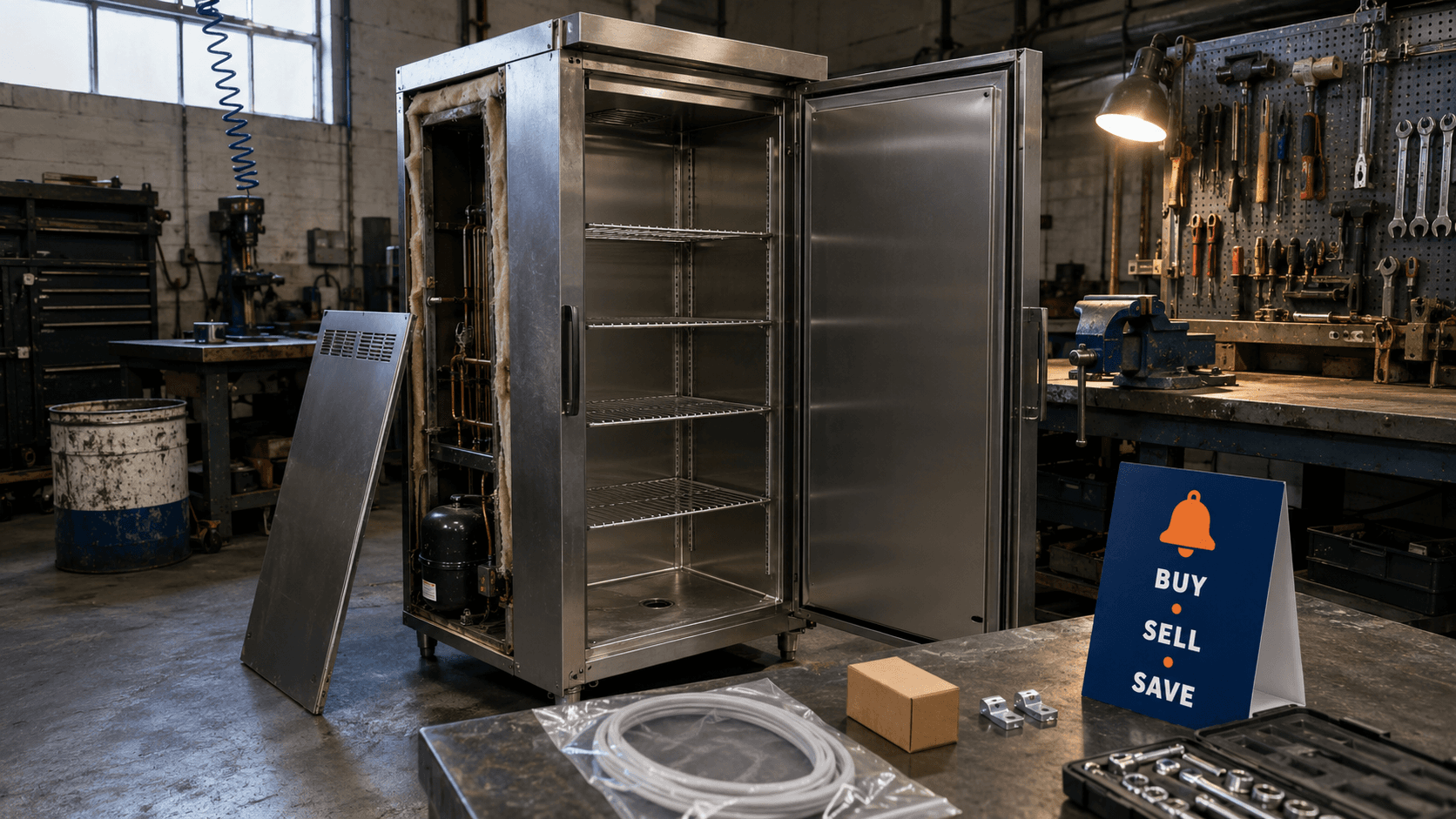
Refurbished is the cosmetic step in the trade body's own glossary. Reconditioned is the one that means worn parts were replaced. Most dealers use them the other way round.
Your fryer goes down on a Friday. You need a replacement by Tuesday and new is out of the question. So you start looking at used, and every third listing says refurbished.
Here is the thing. There is no legal definition of that word. No UK statute, no statutory instrument and no Trading Standards guidance sets out what has to have been done to a machine before a seller can call it refurbished.
That does not make it a con. It makes it a word you have to interrogate. I spent twenty five years fitting and fixing this kit, and the gap between two machines both advertised as refurbished can be the difference between ten years of service and a skip.
What the Words Actually Mean
The trade body has published definitions. Most dealers do not follow them.
Refurbished: The Foodservice Equipment Association, formerly CESA, defines refurbishment as what happens after cleaning, testing and repair. Equipment "may be refurbished to enhance appearance and get rid of any cosmetic damage". In the trade body's own glossary, refurbishment is the cosmetic step.
Reconditioned: The same guide defines this as equipment that "has been subjected to a rigorous inspection and has had any worn parts replaced", usually with a limited guarantee. That is the mechanical one. BS 8887-2 goes further, defining reconditioning as rebuilding or repairing major components close to failure, even where there is no reported fault in them.
Graded: Usually not used equipment at all. One national dealer grades stock from box opened through to gas or electric parts replaced, on items described as unused and fully tested. Graded normally means new with a damaged box.
Ex-demo: Barely a category in UK commercial catering. Of thirty seven UK supplier sites checked, not one used it in a page title.
Used: The honest one. It claims nothing.
So on paper, reconditioned is the stronger word and refurbished is the weaker. In practice dealers use them interchangeably, and several stack all three on one page. None of it is enforceable.
What a Genuine Refurbishment Involves
The test is simple. Did somebody replace parts that were going to fail, or did somebody clean it?
Wear parts replaced before failure, not after. That is the BS 8887-2 line, and it is the honest difference between a refurbishment and a service.
Door seals and gaskets. On refrigeration this is the one that matters and the one that gets skipped. One dealer lists seals as part of its refurbishment. Another names them as a perishable item the warranty will not cover. Same word, opposite meaning.
A timed test run under load. One dealer runs every unit for four hours. A refrigeration specialist runs its stock for twenty four. Switching it on at the bench is not a test.
A written record. What was found, what was replaced, and who did it.
The Questions to Ask Before You Pay
What exactly did you replace? Ask for the parts by name. A vague answer is the answer.
How long is the warranty, parts or parts and labour, and what voids it? Published warranties I checked ran from one month to twenty four. Two dealers publish no length at all. One voids cover if a qualified catering engineer does not install the machine. Another voids it if you miss a service interval.
What does the paperwork actually certify? A PAT sticker is not a legal requirement, and HSE says it "can only give an indication of the safety of an appliance at the time of the test". A gas record names specific appliances at one address on one day. It does not travel with the machine. Once it moves it must be installed and checked by a Gas Safe engineer holding the right commercial or mobile catering ticket, and everything in our guide to second hand catering equipment gas safety applies the moment it lands in your kitchen.
Is it sold as seen? For work equipment it cannot be. HSE is explicit: "Even if equipment is second-hand, it still can't be 'sold as seen' if it is intended for use at work."
One more thing. You are a business, so the Consumer Rights Act does not apply to you. There is no thirty day right to reject. You get a reasonable opportunity to examine the goods, and once you accept them that is largely that. Inspect before you sign.
What It Costs
I priced comparable models across dealer and private listings in August 2026.
A Rational SelfCookingCenter six grid electric ran £4,500 to £4,794 including VAT from a dealer with a three month parts warranty. The same generation privately: £3,055. A Falcon Dominator twin basket fryer was £1,194 to £1,314 from a dealer, £819 privately.
Across refrigeration, combis and fryers the dealer premium ran roughly forty to sixty percent, and up to ninety percent on the better fridges. Range cookers were the exception, where dealer stock was sometimes cheaper than the private ask.
Watch the VAT. Dealer prices are almost always plus VAT and private sales are not, which accounts for a good part of the gap before anybody has replaced a single seal.
Whether the premium is worth paying comes down to two answers: what did they replace, and what will they stand behind. If both answers are nothing, you are paying a dealer margin for a wash and a wipe. If you would rather do your own checking, our guide to buying used catering equipment covers what to look at.
Before You Pay
- Ask what parts were replaced, by name
- Get the warranty length in writing, and whether it is parts only
- Ask what voids it, installation and servicing both
- Check the engineer holds the right commercial or mobile catering gas ticket
- Confirm what any certificate covers, and on what date
- Inspect it yourself before you accept it
- Compare against the private price with VAT taken into account
A word with no legal meaning is not worthless. It is a starting point for a conversation. Ask the questions, get the answers in writing, and you will know which of the two machines in front of you is worth the money. Buy, sell, save only works when you know what you are looking at.
Ready to See What Is Out There?
CaterBids is a fixed price marketplace for used catering equipment and catering vehicles. We are in beta, so what you see is real stock from real sellers. Browse the marketplace. If you are selling, CaterBot reads the data plate from a photograph and pulls the specs, dimensions and a pallet delivery quote, so you are not typing out a listing by hand.
Ready to Sell Your Equipment?
Free to list while the first hundred listings are running, then from £5 a listing, and no final value fee at any point, so what a seller makes is what they keep.
Prepare Your Equipment
- Clean stainless surfaces
- Disconnect safely
- Photograph the data plate
- Box loose parts
- Measure and weigh
- Prepare for pallet collection