

How to Write a Used Catering Equipment Listing That Sells: A UK Seller's Guide
Six photos, the data plate, dimensions and honest condition: how to write a used catering equipment listing that UK buyers actually reply to.
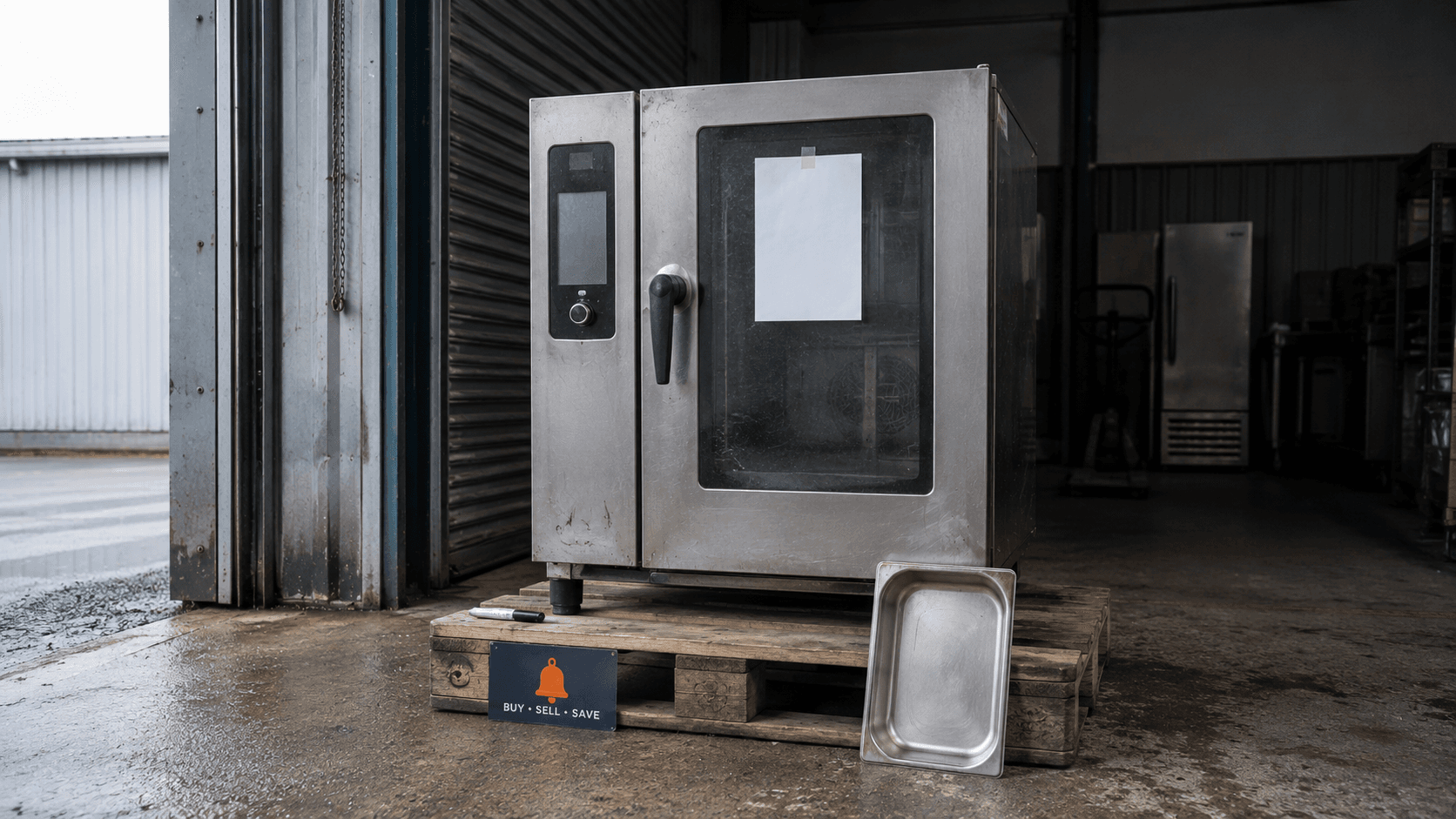
Most used catering equipment does not sit unsold because it is priced wrong. It sits unsold because the listing gives a buyer no way to say yes.
An owner or a head chef looking at a second hand combi oven online is trying to answer about eight questions before they will pick up the phone. Will it fit through the door. What does it run on. Is the seal shot. Who is lifting it onto a van. If the listing answers those, you get calls. If it does not, they scroll past a perfectly good oven and buy someone else's.
Capital tied up in a machine nobody is enquiring about is the most expensive thing in a kitchen, because it is doing nothing and it is depreciating while it does it. So this is the practical version: what to photograph, what to write, and what to say about the parts that are not perfect.
Start with the photographs, because that is what gets clicked
You get up to six photos on a CaterBids listing, so none of them can be a duplicate. Photographing commercial kitchen equipment to sell is not a styling job. It is evidence.
- Clear the shot first: Pull the unit away from the wall, sweep the floor around it, take the blue roll and the mop bucket out of frame. A clean background makes a used machine look maintained rather than abandoned.
- Shoot in daylight, not under the canopy lights: Fluorescent strip light turns stainless green and grey. Open the shutter, or wheel the unit out to the loading bay. Soft overcast daylight is the best light there is for steel.
- Photo one, the full front, straight on: Whole machine in frame, feet to top, nothing cropped. This is the photo people judge in half a second.
- Photo two, a three quarter from the side: Shows the depth, the side panels and whether it has been dragged around a kitchen for ten years.
- Photo three, inside: Door open, chamber lit, rails and runners visible. A clean chamber sells. A greasy one you tried to shoot from an angle sells nothing.
- Photo four, the door seal and the hinge: The two things every used oven buyer checks. Photograph them honestly, wear and all.
- Photo five, the services: The plug, the isolator, the gas connection, the water inlet and the drain. This is the photo that stops a wasted journey.
- Photo six, the data plate: The single most useful photo in the listing, and the one most sellers leave out.
Hold the phone level, get square to the machine, and do not use flash. Flash flattens stainless and hides exactly what a buyer is trying to see.
The data plate is the specification, so photograph it properly
Every piece of commercial kit carries a plate: manufacturer, model, serial number, electrical supply and, on gas, the input rating. It is the difference between "big combi, about 6 grid" and a listing a dealer can price without ringing you.
Get the plate clean before you shoot it. Thirty seconds with a degreaser and a cloth turns an unreadable plate into a readable one. Hold the phone close enough that the smallest line is sharp, and shoot slightly off square if the plate is reflective so the flash of daylight does not sit across the model number.
CaterBids has CaterBot for the next part. You photograph the data plate and it reads it, then fills in the specs and the delivery details on the listing so you are not typing a specification out from scratch. It is AI assisted listing, the platform is in beta and the tool is still being built out, so read back what it gives you and correct anything it has misread before you publish. On a ten item clearance it takes out most of the typing.
If the plate is missing, painted over or unreadable, say so in the description. Buyers can work with a missing plate. They cannot work with a seller who pretends the machine has one.
Dimensions and services, the two things that kill a deal late
Nearly every second hand sale in this trade that collapses late collapses for one of two reasons. It would not fit, or it would not run.
- Give three dimensions in millimetres: width, depth including rear pipework and handles, and height. Measure it. Do not read it off a brochure, because castors, feet and a stand all change the number.
- Say what supply it needs: single phase or three phase, and the current rating. If you are not certain which you have, read 3-phase vs single-phase catering equipment before you write the listing. That one line filters out most of the time wasters.
- Say if it is gas, and which gas: natural gas or LPG, and whether you hold any paperwork for it. The rules on moving second hand gas kit are worth knowing before you list, and second-hand catering equipment gas safety covers where the responsibility sits.
- Say if it needs water or a drain: softened water on a combi, a drain within reach of a warewasher, a cold feed on an ice machine.
- State the access at your end: doorway width, steps, whether a pallet truck can reach it and whether there is a level route to a van.
Describe the condition honestly, including the dent
The instinct is to describe kit the way an estate agent describes a house. It is the wrong instinct. In this trade the seller who names the fault first is the one who gets trusted on everything else in the listing.
- Give the age, or the nearest year: "bought new around 2018" is useful. "Recent" is not.
- Name the cosmetic damage: the dent in the lower left corner of the door frame, the scuffed hinge, the missing shelf. Photograph it as well. A buyer who finds damage you did not mention assumes there is worse you also did not mention.
- Separate what works from what does not: "heats and holds temperature, core probe not reading" is a listing. "Spares or repair" with no detail is an invitation to be offered scrap money.
- Say what has been serviced and when: if you have an invoice or a service record, say so. On used kit that is worth real money.
- Say why you are selling: refit, upgraded to a bigger unit, site closed. It costs nothing and it removes suspicion.
Pricing is its own job. If it is an oven you are moving, the commercial combi oven valuation guide walks through what actually sets the number.
Answer what buyers actually ask, before they ask it
The same questions arrive on every used listing. Put the answers in the description and you halve your messages.
- Is it still in place and working, or already disconnected.
- When can it be collected, and what are your hours.
- Is it on a pallet, and can it be palletised.
- Is there a forklift or a tail lift at your end.
- Will you help load it.
- Are the trays, racks, hoses and the manual included.
Collection and delivery, said plainly
- Decide collection or delivery before you list: "collection only, LS postcode, weekdays" is a clear listing. "Delivery maybe" is not.
- Palletise it properly if it is going on a pallet: strapped to a sound pallet, corner protection on the edges, heavy duty shrink wrap, and the top boxed so nothing bears down on the door or the control panel.
- Disconnect before collection day: a combi still wired in and full of water on the morning of collection is how a driver leaves empty. Gas and electrical disconnection is a job for a qualified engineer, not for the man with the van.
- Be honest about the lift: if it takes two people, a stair climber and a removed door, say so in the listing rather than on the day.
If you are still weighing up where to sell it at all, where to sell used catering equipment sets the options side by side.
The listing checklist
- Six photos taken: front, three quarter, chamber, seal and hinge, services, data plate
- Data plate wiped and photographed sharp, or its absence stated in the description
- Width, depth and height in millimetres, measured rather than guessed
- Supply stated: single phase, three phase, natural gas or LPG
- Faults named, cosmetic ones included, and photographed
- Collection terms, hours, postcode area and loading help stated
- Extras listed: trays, racks, hoses, manual, water filter
A good listing is not a sales pitch. It is a complete answer, and a complete answer is the fastest route to BUY • SELL • SAVE on kit you no longer need.
Ready to list it?
CaterBids is a UK only marketplace for commercial catering equipment. It is in beta, which is worth saying plainly: the sellers going on now are the ones filling the boards.
Right now the first 100 listings on the platform are free. Platform wide, thirty days live, up to six photos, no fees of any kind, open to anyone. That hundred is a listing allowance available to everybody. It is not a limited number of accounts, and it is a separate thing from the hard cap of 100 Founding Trade Member places, which is a different offer entirely.
After the free hundred, a single listing is £5, thirty days live, up to six photos. And on either side of that line, CaterBids takes no cut of what the machine sells for. £5 to list. Nothing off the sale.
Post your listing and put those six photos to work.
Ready to Sell Your Equipment?
Free to list while the first hundred listings are running, then from £5 a listing, and no final value fee at any point, so what a seller makes is what they keep.
Prepare Your Equipment
- Clean stainless surfaces
- Disconnect safely
- Photograph the data plate
- Box loose parts
- Measure and weigh
- Prepare for pallet collection