

Catering Spares in the UK: How to Find the Right Part and When a Machine Is Worth Fixing
Machine down? How to find the right catering spares in the UK from the data plate, OEM vs pattern parts, and when repair beats replacement. CaterBids.uk
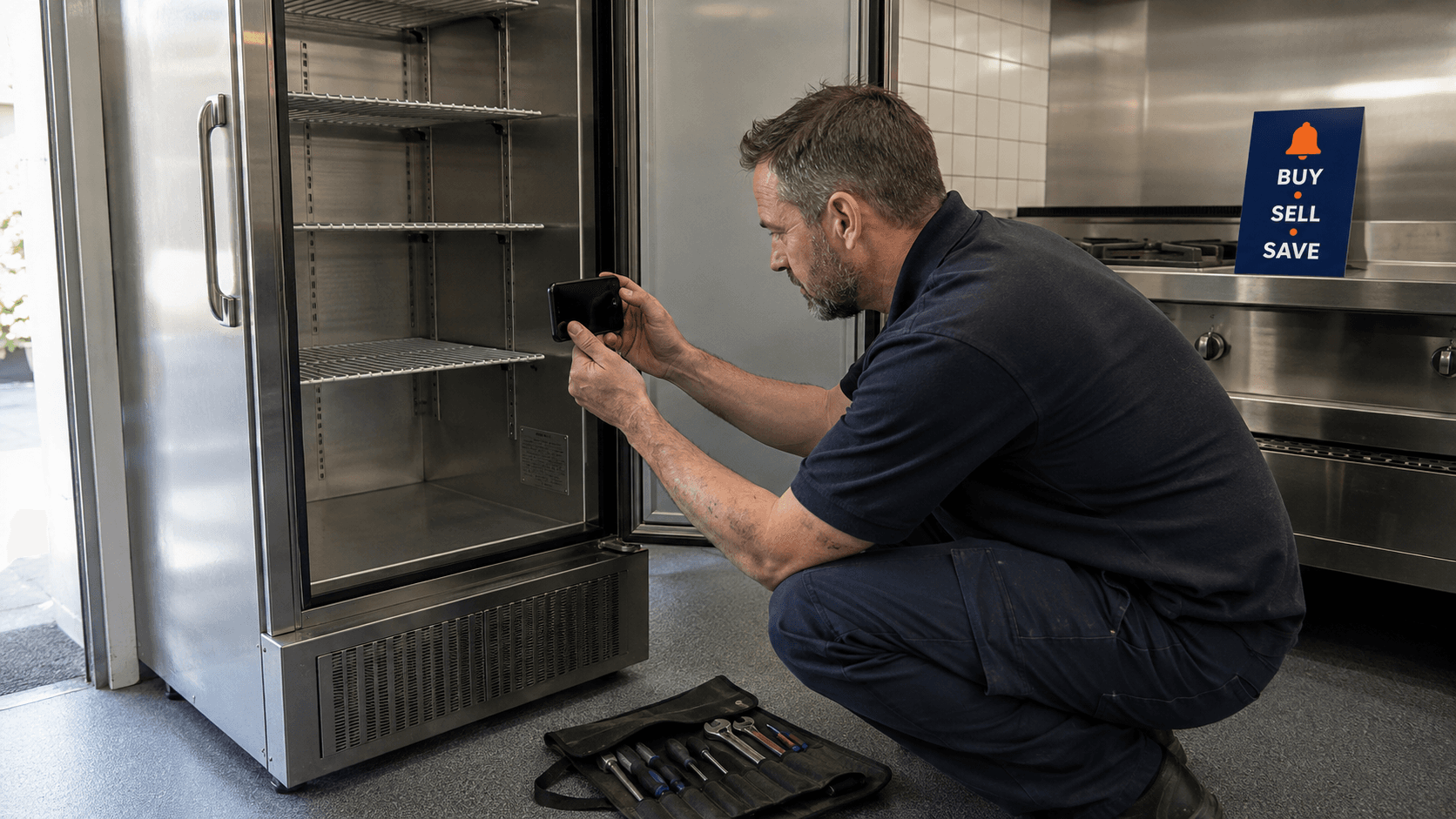
Photograph the data plate on every machine in your kitchen this week. When one goes down mid-service, that photo is the difference between next-day parts and a fortnight of guessing.
The Machine Is Down. Start at the Data Plate
When a piece of catering equipment stops mid-service, the difference between a one-day fix and a two-week saga is usually one photograph.
Every commercial machine carries a data plate: model number, serial number, and on gas kit the appliance category and rates. That plate is how the entire UK spares trade finds your part. Ring anyone without it and you are describing "the seal on the door, sort of grey" to somebody who needs a part number. Photograph the plate before you ring anyone, and if you run a kitchen, photograph every plate in the building this week and keep them in one folder on your phone. Ten minutes now saves days later, and it is the same photograph that sells the machine one day.
Plates wander: check the side panels, behind the door, under the front rail, inside the cabinet on refrigeration. If it has been painted over or polished off, the serial can often still be recovered from the manufacturer with the model and an honest guess at the year.
Where Parts Actually Come From in the UK
- The manufacturer's own spares operation. The good brands run proper ones, and this is half of why the trade tells you to buy good brands used. Lincat runs its own spares line, Rational, Hobart, Foster and Williams all hold UK parts networks. If your machine carries one of those badges, the part almost certainly exists in the country.
- OEM parts distributors. The trade's wholesale layer, holding genuine parts for hundreds of brands in one place. This is usually where your engineer gets the part, and why he can have it next day.
- Pattern parts suppliers. Non-genuine equivalents, cheaper, variable. Fine for a door seal, a castor, a knob or a lamp. Think harder on anything that touches gas, water under pressure or controls, and on gas appliances any replacement part and the work fitting it must keep the appliance safe: parts on the gas train are engineer territory, not a parcel to fit yourself.
- The used market. For obsolete machines, a donor unit is sometimes the only parts shop left. A dead machine of the same model is worth buying cheap purely for its motors, doors and controls, and it is exactly the sort of thing that turns up on a marketplace built for the trade.
The Parts That Actually Fail
Twenty five years of stripping these machines down says the same components come up over and over: door seals and gaskets on refrigeration, thermostats and thermocouples on gas, solenoid valves and wash arms on dishwashers, elements on fryers and ovens, hinges and handles on everything, controllers on anything modern, and fan motors on refrigeration and combis. None of these mean the machine is finished. They are consumables on a machine designed to be maintained, which is the whole reason commercial kit is worth buying used in the first place.
When It Is Worth Fixing, and When It Is Not
The rule of thumb I have always worked to: if the repair costs more than half what a good used replacement costs, stop and think. Not half the new price, half the used price, because the used market is the honest benchmark for what the machine is actually worth.
Worth fixing: a good brand with parts in the UK, a wear part rather than a core failure, a machine under ten years old, anything where the fix is a seal, a stat, an element or a motor.
Think hard before fixing: a dead brand with no UK parts network, a compressor gone on an old fridge, a cracked heat exchanger, rust into the structure, or a controller that is no longer made. A £300 repair on a machine worth £400 used is not a repair, it is a deposit on the next breakdown.
And when the answer is replace, the broken machine is still not scrap. Listed honestly as spares or repair, with the fault stated plainly, it is worth real money to somebody who needs the donor parts. Our guide on what your used kit is worth to buyers covers the other side of that coin: parts availability is the first thing a smart buyer checks.
Keep the Paperwork, It Is Money
Every repair invoice, every part fitted, every gas safety record: keep them with the machine. Service history moves the resale price of used catering equipment more than age does, and a folder of receipts is the difference between "seller says it works" and proof it has been looked after. The habit costs nothing and pays twice, once in faster diagnosis next time, once on the day you sell the machine on.
The Machine-Down Checklist
- Photograph the data plate before ringing anyone
- Check the simple things first: power, gas, water, filters, door switches
- Price the genuine part and the pattern part before deciding
- Get the used replacement price before agreeing a big repair, it is your benchmark
- Gas train parts and anything pressurised go to the engineer, not the postman
- File the invoice with the machine's history when the job is done
Fix It, Run It, Sell It On
A commercial machine with a parts network behind it is never really broken, it is between repairs. That is the quiet engine of the whole used trade: kit built to be maintained, passing from kitchen to kitchen with its history in a folder. BUY • SELL • SAVE works because the machines last, and they last because someone bothered to fit the right part.
Ready to Buy or Sell?
Browse parts, spares and machines on the marketplace, or if you have spares, donor machines or kit you have decided not to repair, list them on CaterBids. Spares-or-repair listings are welcome when the fault is stated honestly. The first 100 listings on the platform are free, then it is from £5, and there is no cut of your sale either way.
Ready to Sell Your Equipment?
Free to list while the first hundred listings are running, then from £5 a listing, and no final value fee at any point, so what a seller makes is what they keep.
Prepare Your Equipment
- Clean stainless surfaces
- Disconnect safely
- Photograph the data plate
- Box loose parts
- Measure and weigh
- Prepare for pallet collection